Asia Europe Market Enters Sustained Correction as Suez Resumption Advances
August 31, 2026
The Asia-Europe trade has entered a sustained rate correction phase during early September, with spot rates declining progressively from their mid-year peaks as carriers adjust pricing strategies in response to weakening demand acceptance. Early September average rates for 40HC containers have declined substantially, with actual booking prices dropping to lower levels across multiple carriers as the market recalibrates from elevated June-July levels. The correction reflects softer demand fundamentals entering the traditional September-October off-season period, with carriers now balancing pricing discipline against vessel utilization targets. Simultaneously, the regional routing landscape continues evolving, with Maersk and Hapag-Lloyd’s GEMINI alliance AE19 service resuming Red Sea-Suez Canal transit effective September 8, marking the first structural return to Suez within the GEMINI network and advancing the broader industry shift from case-by-case exploration to systematic resumption.
To help you better understand the current market environment and support your sales activities at origin, please find below our latest market observations and outlook for the first half of September.
Rate Direction and Carrier Pricing Strategy
GEMINI alliance average rates have declined substantially per 40HC, with Maersk Week 37 spot rates adjusting downward, representing a moderate week-on-week reduction. Index-linked rates have similarly adjusted, while Hapag-Lloyd online quotations reflect the alliance’s coordinated pricing recalibration across different ports and sailings.
Ocean Alliance carriers maintain higher average rates, though downward pressure is evident across the alliance. CMA CGM online rates have reduced, while COSCO and OOCL quotations show similar adjustments. Evergreen Marine rates demonstrate the alliance’s efforts to maintain pricing discipline while adjusting to softer market acceptance.
Premier Alliance spot rates show moderate levels, with Yang Ming regular FAK rates and HMM online spot rates reflecting current market conditions. ONE has maintained regular FAK rates for September 7-15 sailings, while simultaneously offering volume-based special rates at lower levels for select East China sailings, including FE4 departing September 5 and FE3 departing September 2, demonstrating continued commercial flexibility for cargo commitments.
MSC has reduced its early September SS-class rates, with comprehensive blended rates declining to lower levels as the carrier actively pursues vessel utilization optimization through tiered pricing structures.
The correction trajectory reflects the September-October off-season narrative, with the pace rather than direction of decline becoming the core negotiation point between carriers and shippers. While carriers may attempt to halt the decline through rate increase announcements, demand-side support remains difficult to secure given seasonal fundamentals and the sustained rate levels maintained throughout the summer period.
Capacity Outlook and Service Deployment
September East China to Europe base capacity averages 324,000 TEU weekly according to our latest schedule review, representing relatively stable supply levels. However, capacity distribution shows significant variation around the upcoming National Day holiday period, with Week 41 capacity compressed to 205,931 TEU, the lowest level of the period.
National Day blank sailing activity totals 11 cancellations across the holiday window, fewer than 2024’s 14 and 2025’s 17, but with sharper concentration in post-holiday Week 41. That single week carries 7 blank sailings representing 64% of the holiday window’s total cancellations, with Ocean Alliance leading at 6 blank sailings and the remaining cancellations spanning GEMINI, MSC and Premier Alliance services. The multi-alliance coordination reflects carriers’ strong intent to control capacity and protect pricing discipline ahead of the holiday.
Using the four-week average capacity excluding the National Day three-week window as baseline (324,331 TEU), effective capacity loss during Week 41 reaches 118,400 TEU with a 36.5% loss rate, higher than 2024’s 26.2% but lower than 2025’s 47.8%. The peak capacity reduction shifting to the post-holiday second week is consistent with 2025’s pattern and suggests carriers are prioritizing rate protection during the cargo restart period.
Several service adjustments affect East China port coverage during September due to severe Shanghai port congestion caused by recent typhoon weather. Premier Alliance FP2 service has implemented 6 Shanghai port omissions, including Weeks 33 and 35 (alternating with Ningbo) plus Weeks 38-41 (Ningbo-only calls). Week 36 carries an EMC CES service blank sailing, while Week 37 includes a Premier FP2 cancellation.
Routing Developments and Operational Conditions
Maersk and Hapag-Lloyd announced on August 10 that their GEMINI alliance AE19 service will resume Red Sea-Suez Canal transit, canceling Cape of Good Hope routing and becoming the first service within the GEMINI network to structurally return to Suez. The service, designated SE4, takes effect from Berlin Maersk voyage 628W/637E with Suez passage expected on September 8. According to Maersk’s Q2 earnings call, four services have now returned to the Red Sea-Suez corridor (AE15, MECL, WAF6 and AE19), covering approximately one-third of normal transit cargo volume, with resumption advancing from case-by-case exploration to systematic implementation.
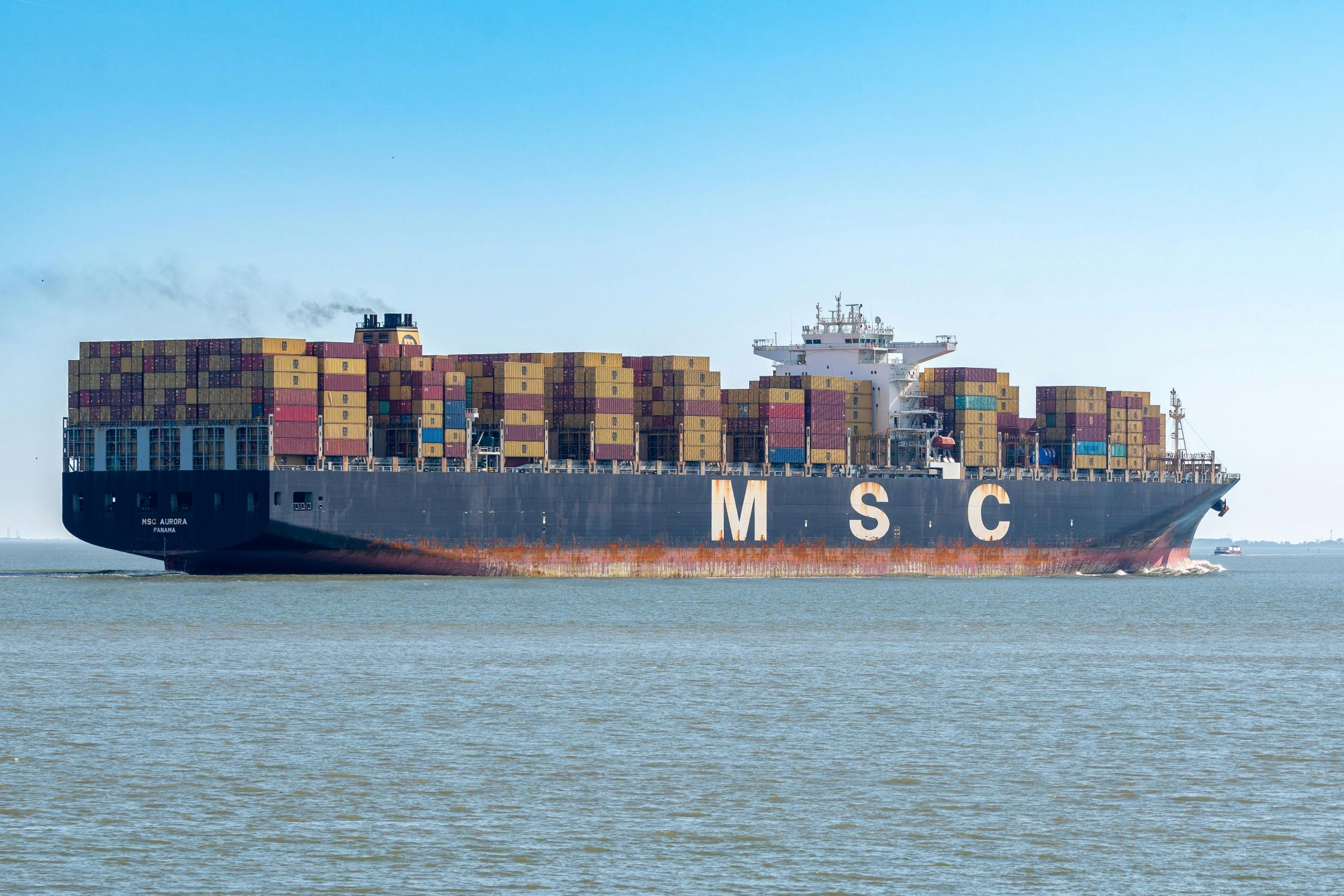
MSC announced limited resumption of Suez Canal transit for select eastbound and westbound services after evaluating Red Sea security conditions, covering 5 voyages total across both directions. The carrier stated booking confirmations and schedules will be updated service-by-service with phased implementation and emergency adjustment capability retained. For Europe trade, the Albatros Service eastbound return leg is included, though no westbound Europe-bound leg has been announced yet.
China port congestion is gradually easing, with container ship capacity at Chinese ports declining 19.2% week-on-week to 304,000 TEU as of August 28. However, Shanghai’s backlog from Typhoon Bebinca remains substantial, with Yangshan vessels averaging approximately 12 days waiting time, Waigaoqiao approximately 7-8 days, outer anchorage holding approximately 200 vessels awaiting berth, and port backlog of approximately 400,000 TEU requiring several weeks to clear. Ningbo-Zhoushan terminals resumed operations on August 28 following 43 hours of stoppage, with initial recovery creating concentrated vessel returns and another berthing peak.
We recommend maintaining routing flexibility and close communication with our operations team for shipments with tight delivery windows. While selective Suez Canal resumption is advancing, the broader network continues prioritizing Cape routing given ongoing security considerations, and port congestion recovery timelines require adaptive planning for equipment positioning.
RS Logistics will continue monitoring carrier pricing strategies, capacity deployment adjustments around the National Day period, service routing developments and China port congestion recovery closely. Our EMEA, Intra-Asia and Oceania Trade teams remain available to support booking planning, routing evaluation and space coordination for upcoming shipments. We will continue sharing timely updates as market conditions evolve throughout the first half of September.

.svg)